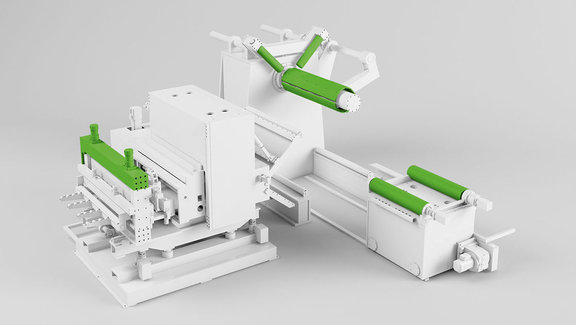
Straightening process
Sheet metal plates with thicknesses ranging from over 50 mm to sheet metal strips in the form of extremely thin foils are straightened prior to further processing. The material undergoes a multiple back-and-forth bending process with a steadily decreasing curvature between the straightening rolls.
The number of straightening rolls used depends on the desired straightening result. Straightening sheet metal that has unevenness in both the rolling and transverse directions is particularly challenging. In such cases, the straightening process may need to be repeated several times to completely eliminate the multi-axis stress states in the material.
The best results are achieved with precision straightening machines, which are designed to be extremely low-stretch and equipped with roll deflection compensation.
LORENZ straightening machines are characterized by particularly high bending and tensile stiffness – for maximum precision and process reliability.

Throughfeed straightening
During pass-through straightening, the actual material thickness is set at the machine outlet and the material thickness minus the feed is set at the inlet.
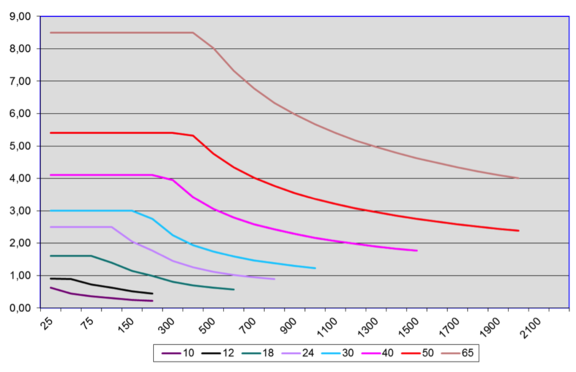
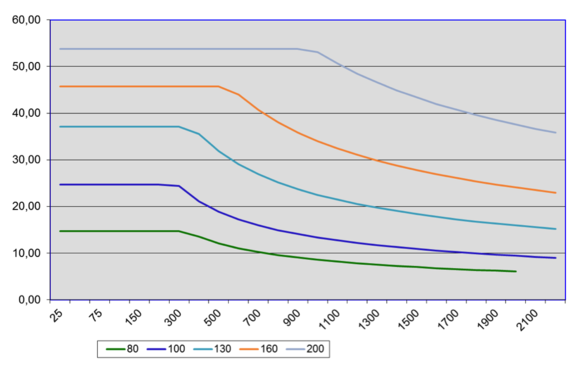
The required values are either calculated automatically by the comfort control or can be taken from the feed diagram.
In this process, the material is straightened in the direction of travel.
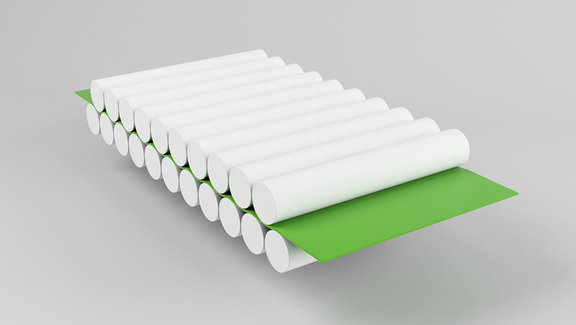
Upright straightening
In this type, the strip is additionally saber-straightened. This effect occurs due to clamping the strip before and after the leveller. The upright straightener located at the outlet is moved from the centre for this purpose. However, the actual edgewise straightening effect occurs in the straightening machine, where the material is in the plastic range.
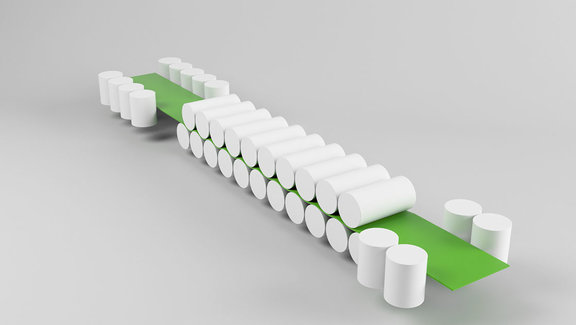
Roller deflection
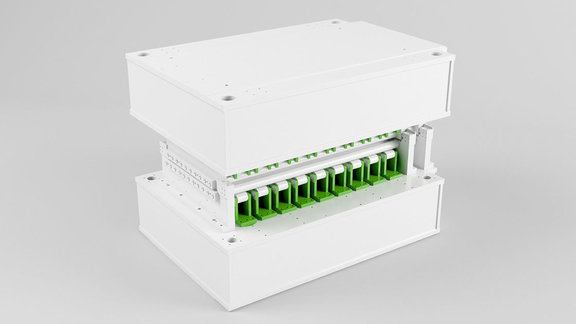
This is the most complex type of straightening. Strips that are not the same thickness across the entire width and different lengths therefore have a transverse curvature. A distinction is made here between edge waves and centre buckles. To correct these defects, a straightening machine with roll deflection is required, which allows the individual back-up roller blocks to be fed.
Performance diagram-I
Straightener roller diameter 10–65
Material strength 500N/mm²
Performance diagram-II
Straightener roller diameter 80–200
Material strength 500N/mm²
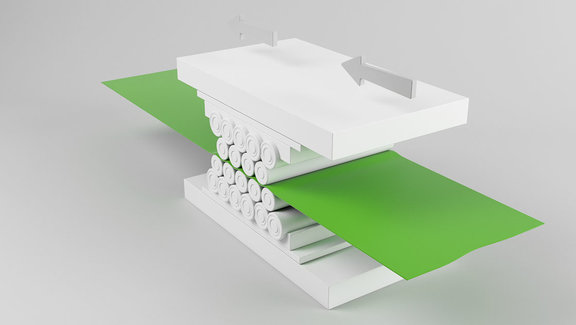
9-roller straightening machines
9-roll levellers are used to straighten out coil curvatures, whereby the coil curvature must always have the same curvature dimension. If this dimension changes and becomes larger, the leveller needs to be readjusted. It is not possible to obtain the same straightening quality from the outer to the inner coil diameter, nor is it possible to reduce existing stresses in the material.
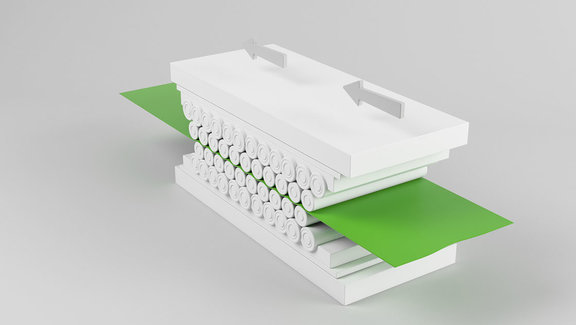
21-roller straightening machines
21-roll precision straighteners are used to straighten the starting material with precision straightness, whereby the size of the coil curvature is irrelevant. The machine even straightens out alternating bends. One advantage of the precision leveller is that stresses in the coil material are relieved, making further processing easier.
Part straightening machines
Part straightening machines are used for the straightening of individual parts.
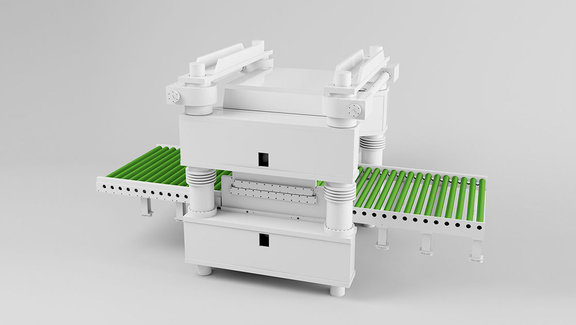
Strip straightening machines
Strip straightening machines are used in complete lines where strips are straightened in a continuous operation.
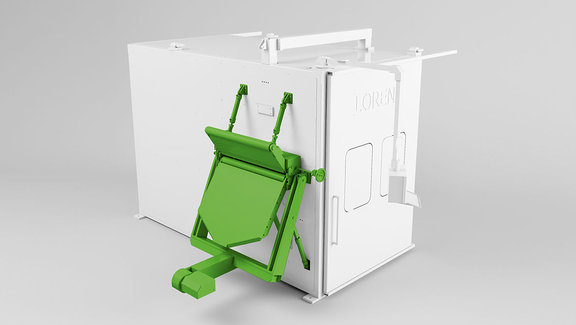
Bevel gear spreading
This handwheel-operated spreader is manually operated by bevel gears and is used for coil weights up to 360kg.
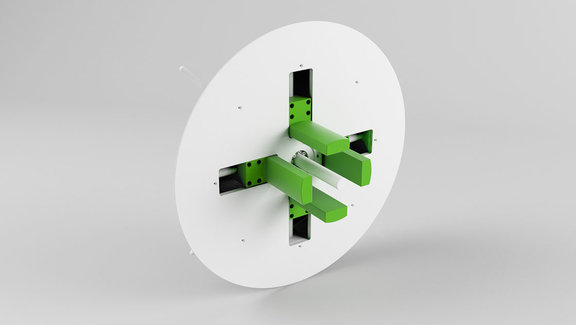
Articulated lever spreading
This hand-crank-operated spreader is manually/hydraulically operated via articulated levers and is used for coil weights up to 3,000kg.
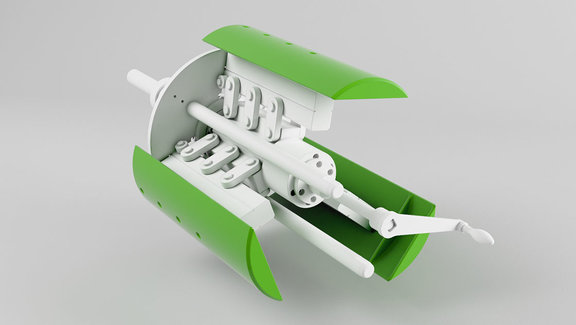
Sliding wedge spreading
Spreading is carried out hydraulically with an automatic re-tensioning system that can be switched off via sliding wedges, which reduces the spreading force and increases stability by means of a large-area support. Maximum coil weight 3,000kg.
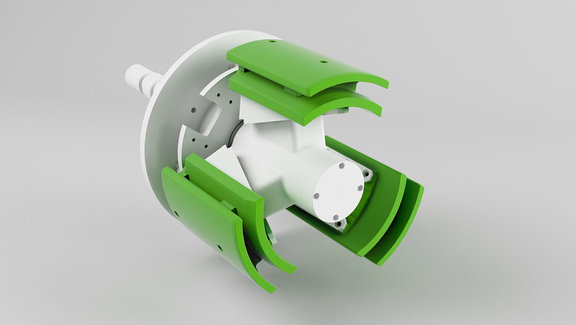
Driven decoiler
Driven decoilers are used for thin and delicate strips, where no tension should be applied to the material.
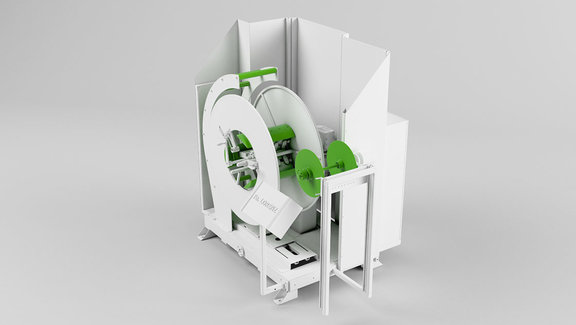
Horizontal unwinder
Horizontal unwinders are used for thin and narrow strips.
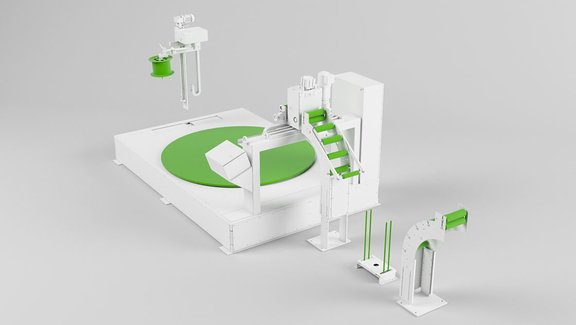
Unwinder reel
Braked unwinders are used for all strips that are unwound from either a straightening machine, a strip puller or a profiling line.
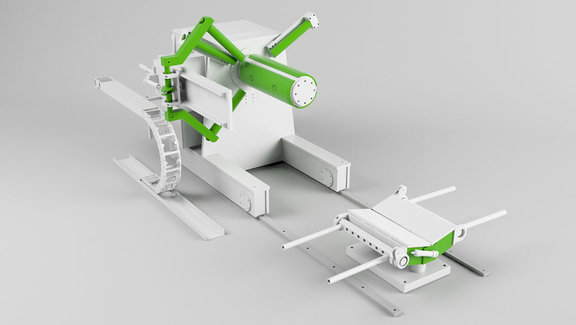
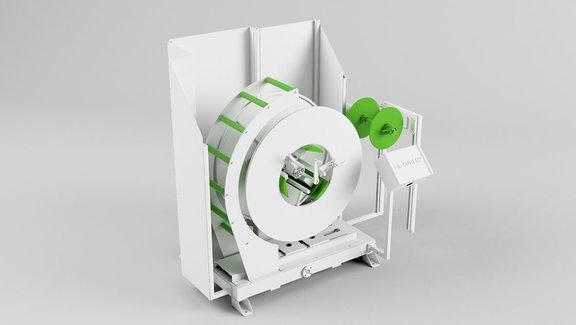
Einfachabwickelhaspel
HM 1500.1
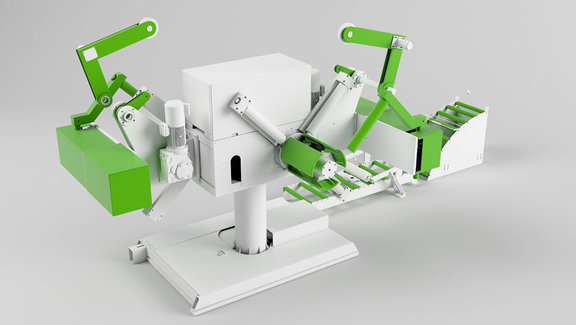
Doppelabwickelhaspel
HH 8000.2
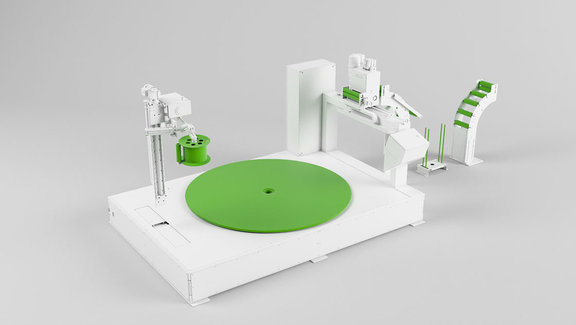
Horizontalhaspel
LH 4000.1 - BA 100/220.2
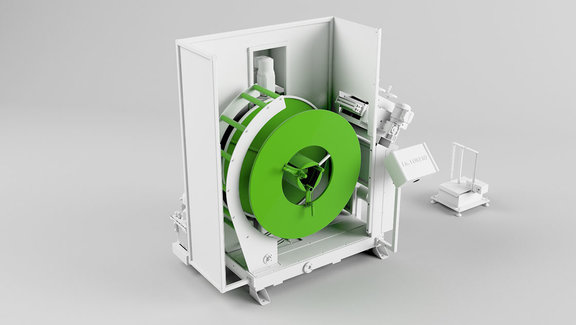
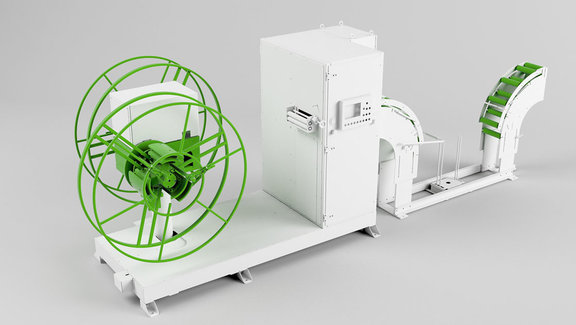
Kompaktabwickelanlage
Richteinheit
HH 3000.2 - BRM 18/320.19 - BFU
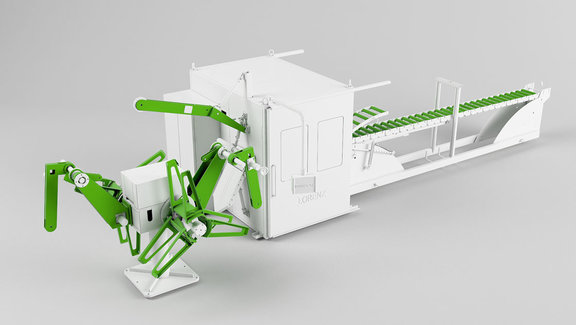
Präzisionsrichtanlage
HH 3000.2 - BRM 30/220.21- BFU 2 - WVE
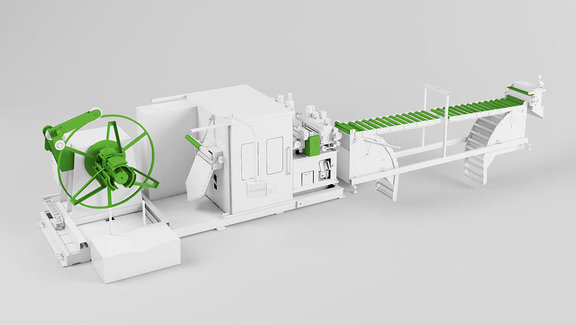
Endloszufuhranlage
HH 5000.1 - BRM 50/650.21- BSW 4/650 - BÜU 6
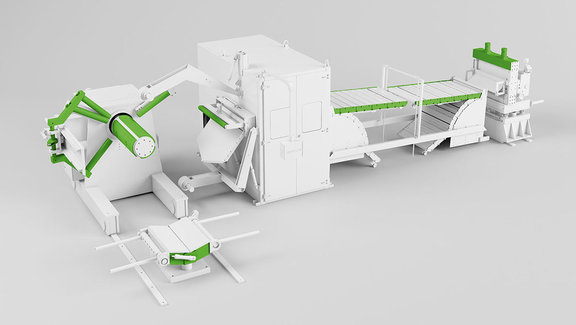
Abwickel -/ Vorschubanlage
HH 20000.1 - BRM 50/1020.21 - BÜU 6 - WVE
Vorschubrichtanlage
HH 25000.1 - VRM 65/1620.9 - BSW 3/1620